Spécial Jakarta
Boiling Mud and Volcano Rims on a Jakarta Day Trip in October
Boiling pools at Kawah Domas, a crater rim you reach in a 10 minute walk, and a hot spring at the end. All of it fits in one day out of Jakarta.

Par Tomé SoaresThe city read on foot, one kampung at a time
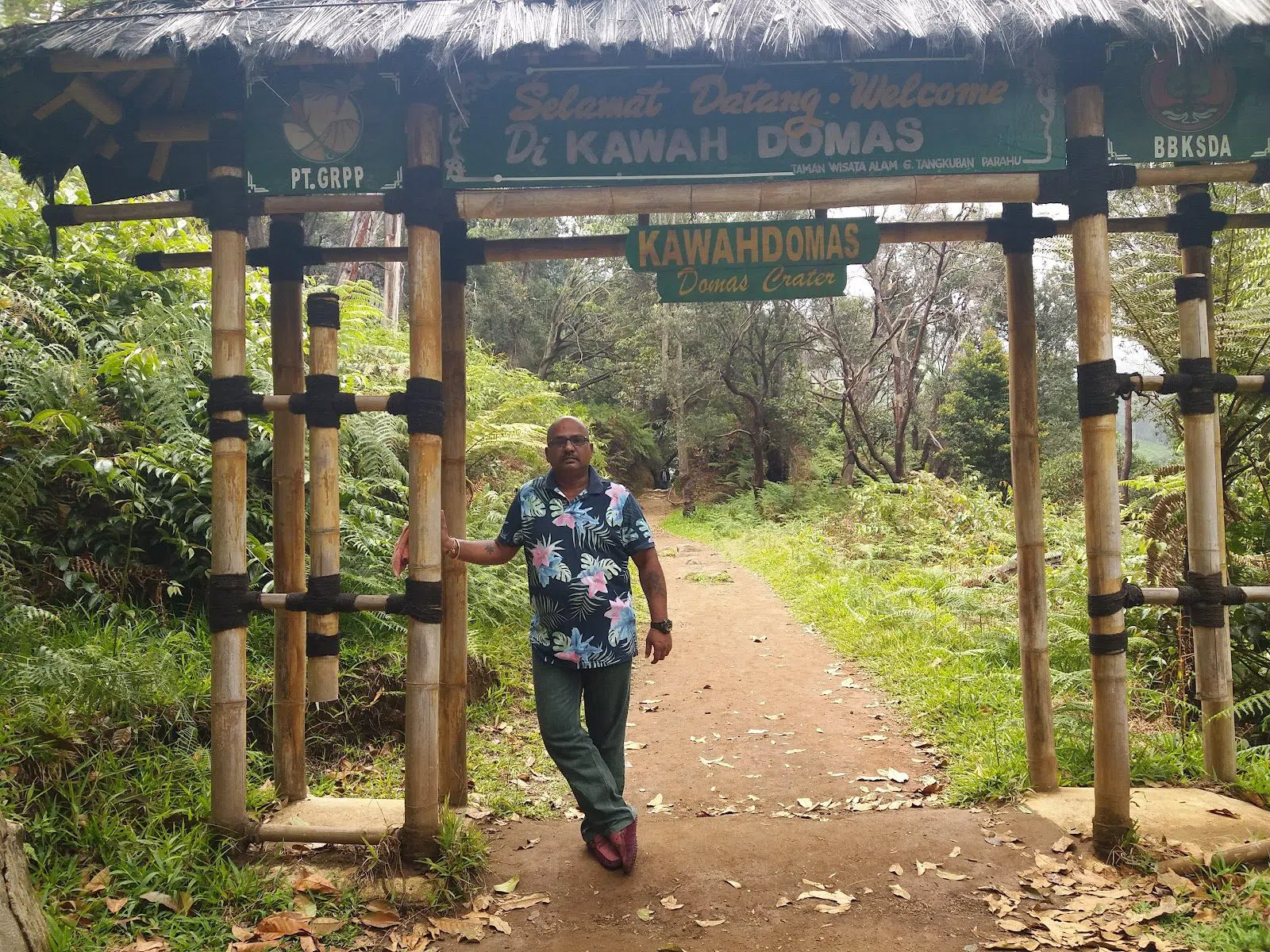
At Kawah Domas (Mount Tangkuban Perahu), people lower eggs into pools of boiling water on sticks and in bamboo baskets. The hollow lies 1.2 km below the main crater rim, and the car park up there is a five to 10 minute walk from a live volcano. You buy admission at the gate on the day.
The rim at Kawah Ratu
Mount Tangkuban Perahu (Kawah Ratu rim) is a wide, shallow bowl of grey-white rock, its walls streaked yellow with sulphur and cut by steam vents. A low metal railing runs along the lip, and behind it a row of warung stalls sells grilled corn and knitted beanies. Pine ridges rise past the stalls on the far side of the car park.
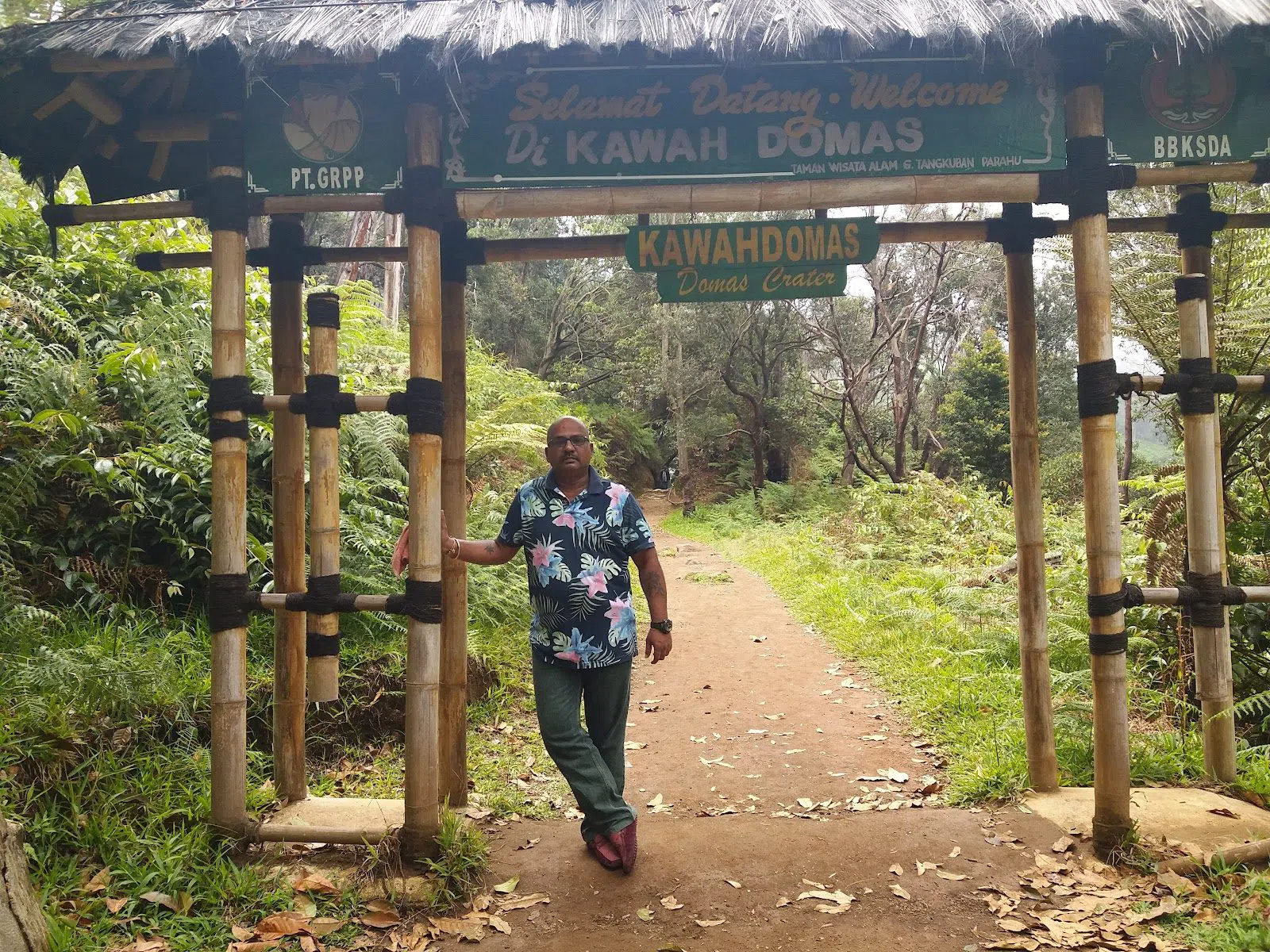
You drive to within a five to 10 minute walk of the crater, which is why the mountain works for a group of mixed walking ability. Foreign admission is Rp200,000 on a weekday and Rp300,000 at weekends. A vehicle pays Rp15,000 to Rp135,000, and the shuttle is Rp10,000. Coaches pay Rp120,000 to Rp135,000 on top of each head, and park at the rim itself.
You cannot reserve, and you do not need to. The alert level has sat at Level 1 (Normal) through 2026. Gates close on short notice if that changes, which is the one thing that can end the day before it starts.
Préparez votre voyage à Jakarta
Prix en temps réel de nos partenaires de réservation.
Annulation gratuite sur de nombreuses chambres. Nous pouvons percevoir une commission lorsque vous réservez.
A second crater at Kawah Upas
Kawah Upas (10 minutes along the rim from the Kawah Ratu car park) is a narrow, deep crater with a scrubby green floor. You see it across a barren ash ridge from behind a rope-and-post barrier, stunted pines on the lip. There are no facilities and nothing set up for groups, but it is wilder than the main bowl and worth the short detour.
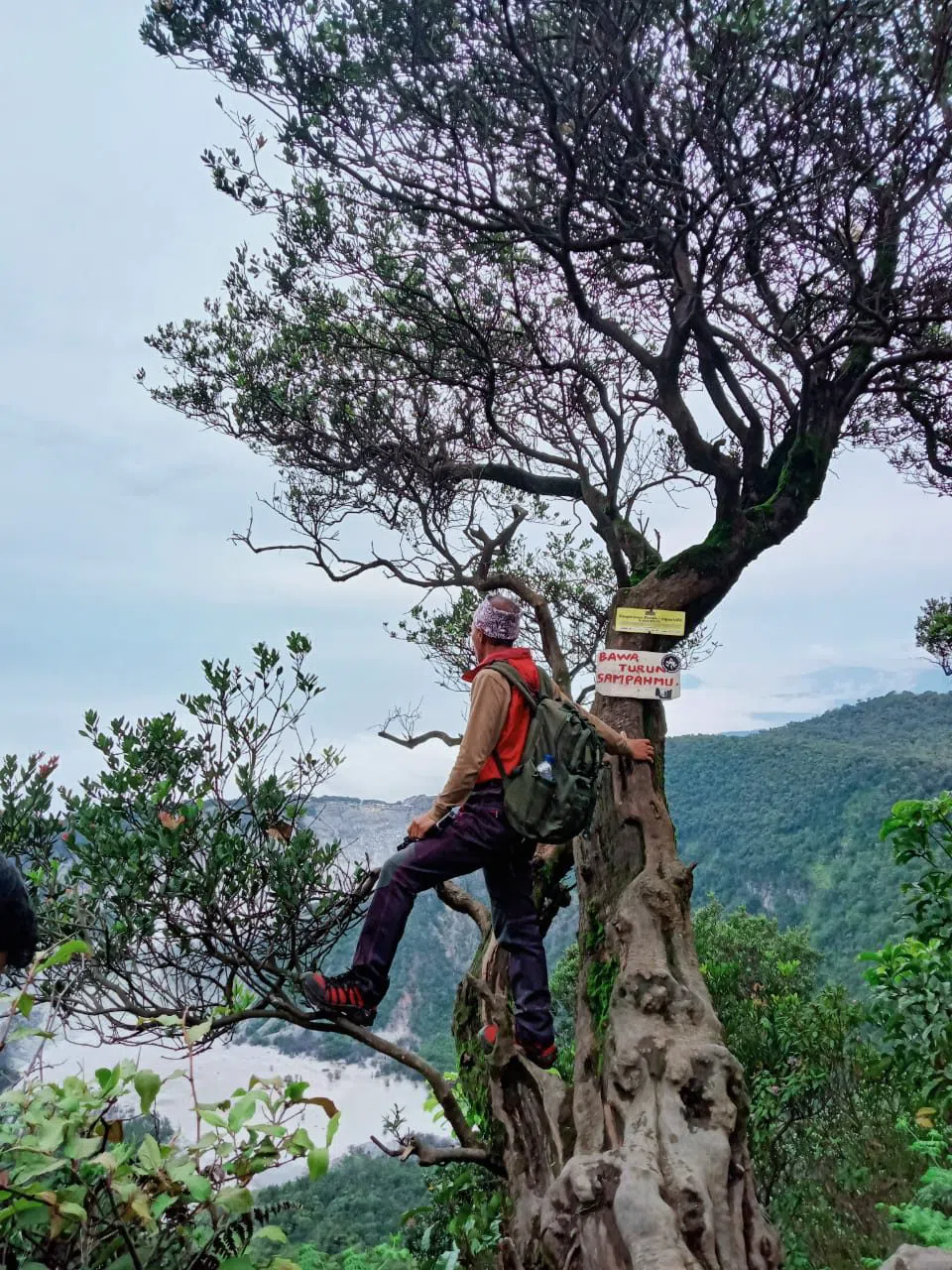
Your volcano admission covers it. The descent into the crater is restricted and often closed for safety, so ask at the gate before you promise anyone a walk down into it.
Down to the boiling mud at Kawah Domas
Terraced pools of clear boiling water sit in a pale sulphur-crusted hollow, grey mud bubbling beside them and steam drifting towards a dense forest ridge above. This is the one place on the mountain where you reach the geothermal activity with your hands. You pay for eggs and the sulphur mud spa on site.
The trail is 1.2 km each way, 30 to 40 minutes down through forest and back up a flight of stairs. The ground is slippery in places and hot enough to scald. Take the descent slowly and keep to the marked line through the pools.
The walk is guided only. One guide takes one to six guests, and a larger party splits into pods behind separate guides. The guide costs Rp100,000 for a party of up to six, on top of park admission, and you arrange it at the trailhead on the volcano road rather than online.
How long the day takes
A guided round trip out of Jakarta runs nine to 10 hours door to door. Give the morning to the mountain and leave the lower stops for the afternoon, because cloud sits on the rim as the day goes on and most of the fallbacks below the gate shut between 16:00 and 18:00.
The order that works is the crater first, then Domas while your legs are fresh, then lunch on the way down and hot water after that. Anything you leave out of the morning is difficult to recover.
Tickets at the gate and booking ahead
You cannot book anything on the mountain itself. You buy admission at the gate and pick up a Domas guide at the trailhead, both on the day. The transport out of Jakarta is the part that needs arranging in advance, and guided trips run seven days a week, Monday to Sunday.
Lunch below the crater
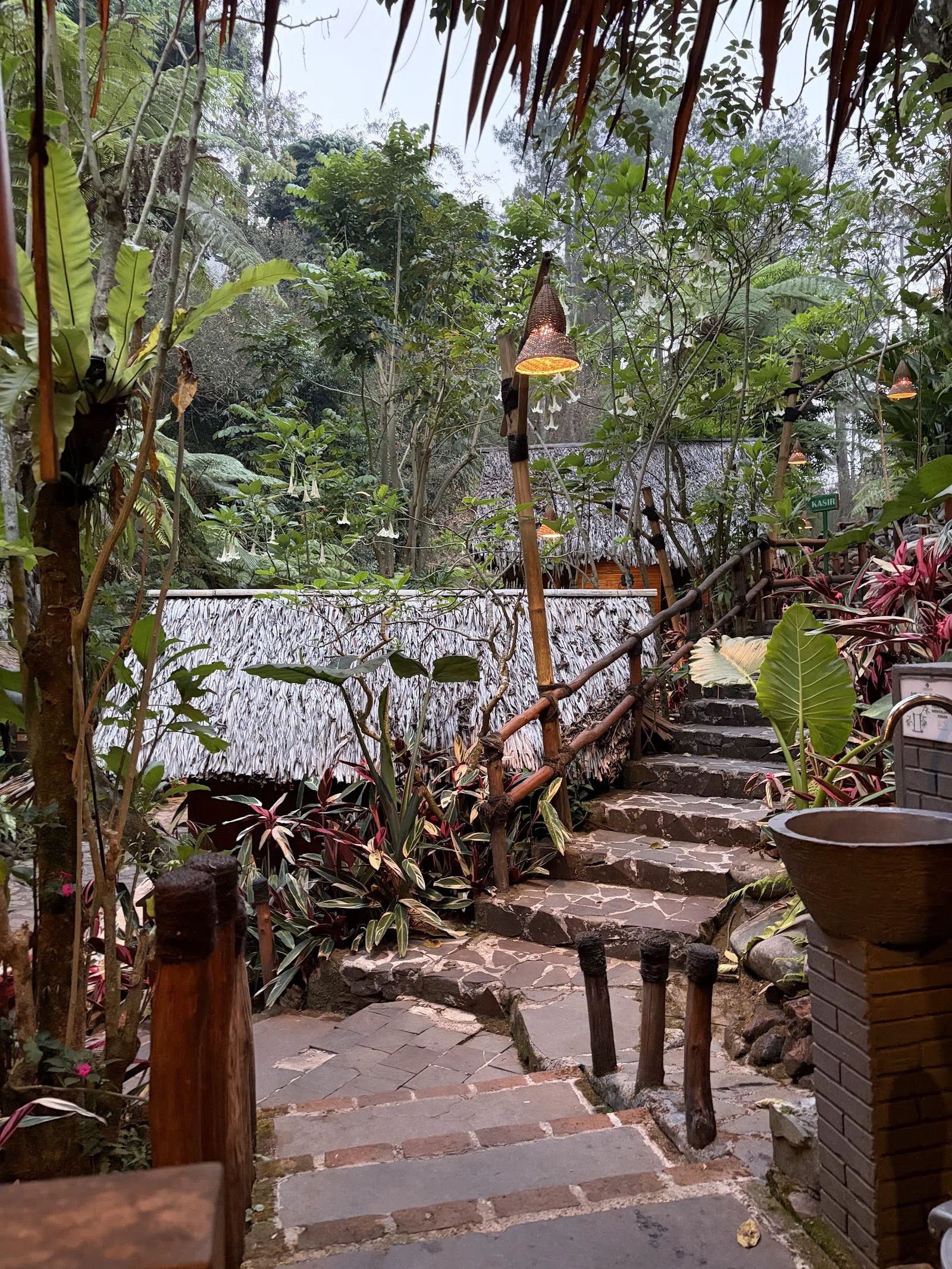
Kampung Daun Culture Gallery & Café has thatched open-sided bamboo saung huts along a stream at the bottom of a wooded ravine, stone steps between them and candle lanterns inside. The ravine is cool and loud with water. Sundanese mains run Rp50,000 to Rp150,000, and the kitchen works 10:00 to 21:00 on weekdays, from 09:00 at weekends. Walk-ins go through reception. The huts are allocated, so a large party has to call ahead.
Dusun Bambu Family Leisure Park covers 15 hectares and has four themed restaurants and an online ticket desk. Woven-bamboo pods shaped like giant birds' nests sit in a tree above a small lake with rowing boats, and terraced flower beds climb the slope behind. Entry is Rp25,000 to Rp40,000 by day and season; mains are Rp30,000 to Rp100,000. Open 09:00 to 21:00 on weekdays and 08:00 to 23:00 at weekends. Book the Lutung Kasarung platform ahead or you will eat at the canteen.
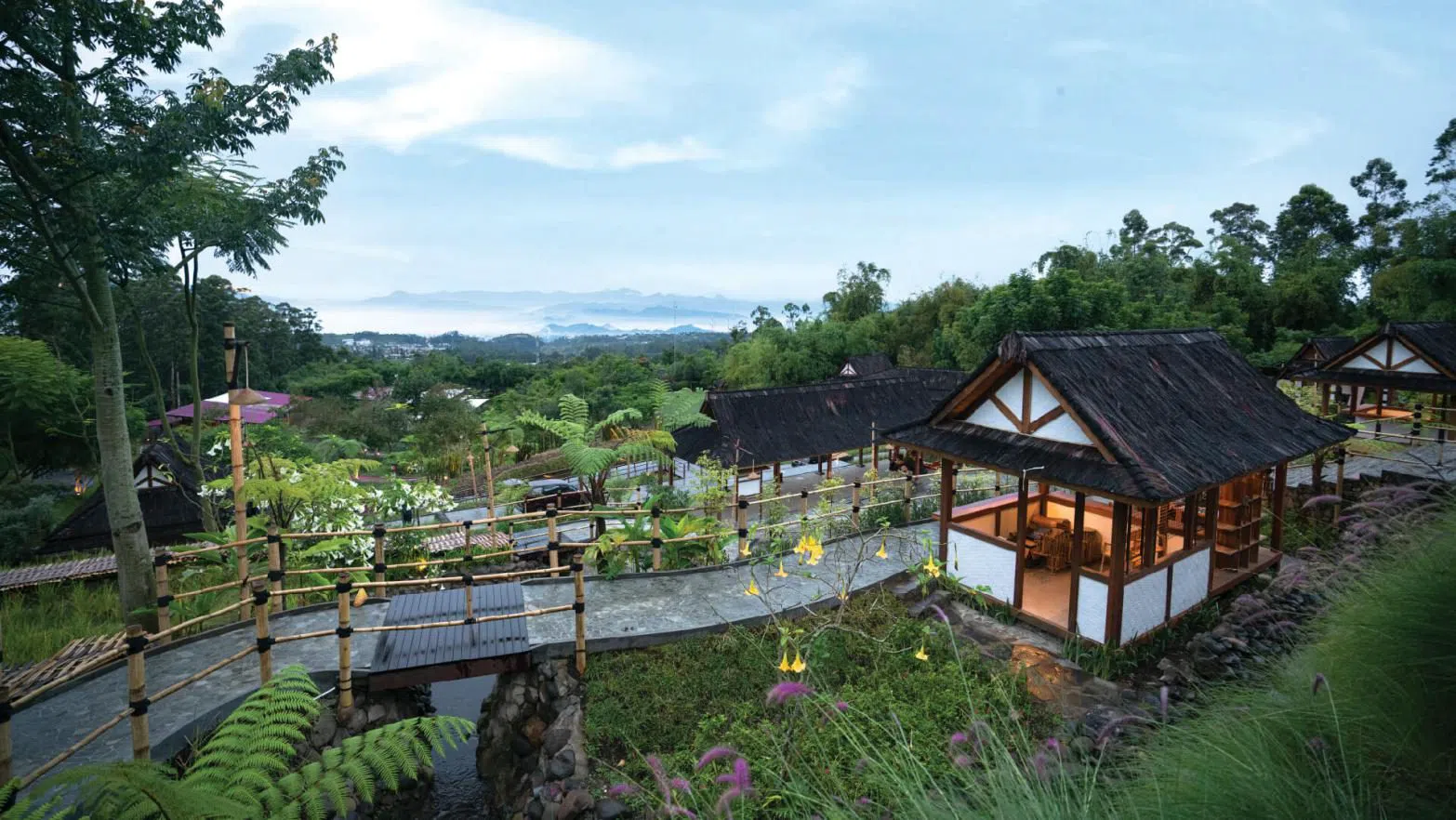
Floating Market Lembang has wooden sampan boats moored side by side as food stalls on a green lake, cooks in conical hats handing bowls across the gunwale to wooden walkways. Pedal boats go out between them. You buy tokens at the entrance, and the stalls do not take cash. Entry is Rp30,000 on a weekday and Rp35,000 at weekends, including a drink voucher, with packages at Rp50,000 to Rp60,000 and rides from Rp10,000 to Rp75,000. Open 09:00 to 18:00 on weekdays, 09:00 to 19:00 at weekends and on holidays.
Hot springs at Ciater and Maribaya
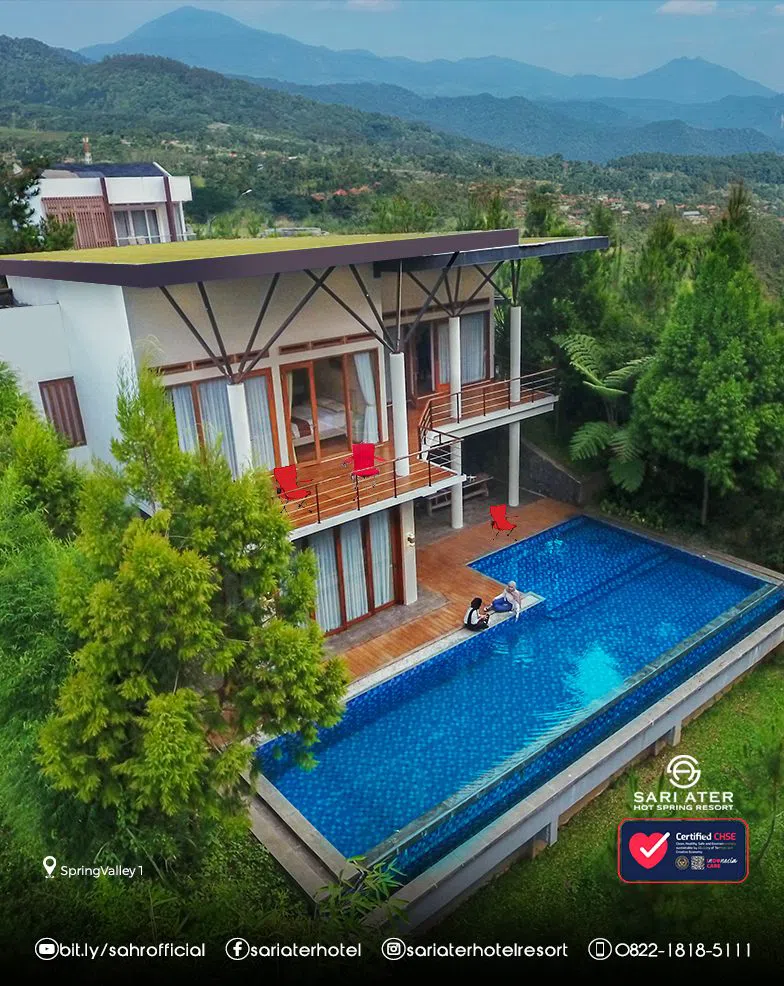
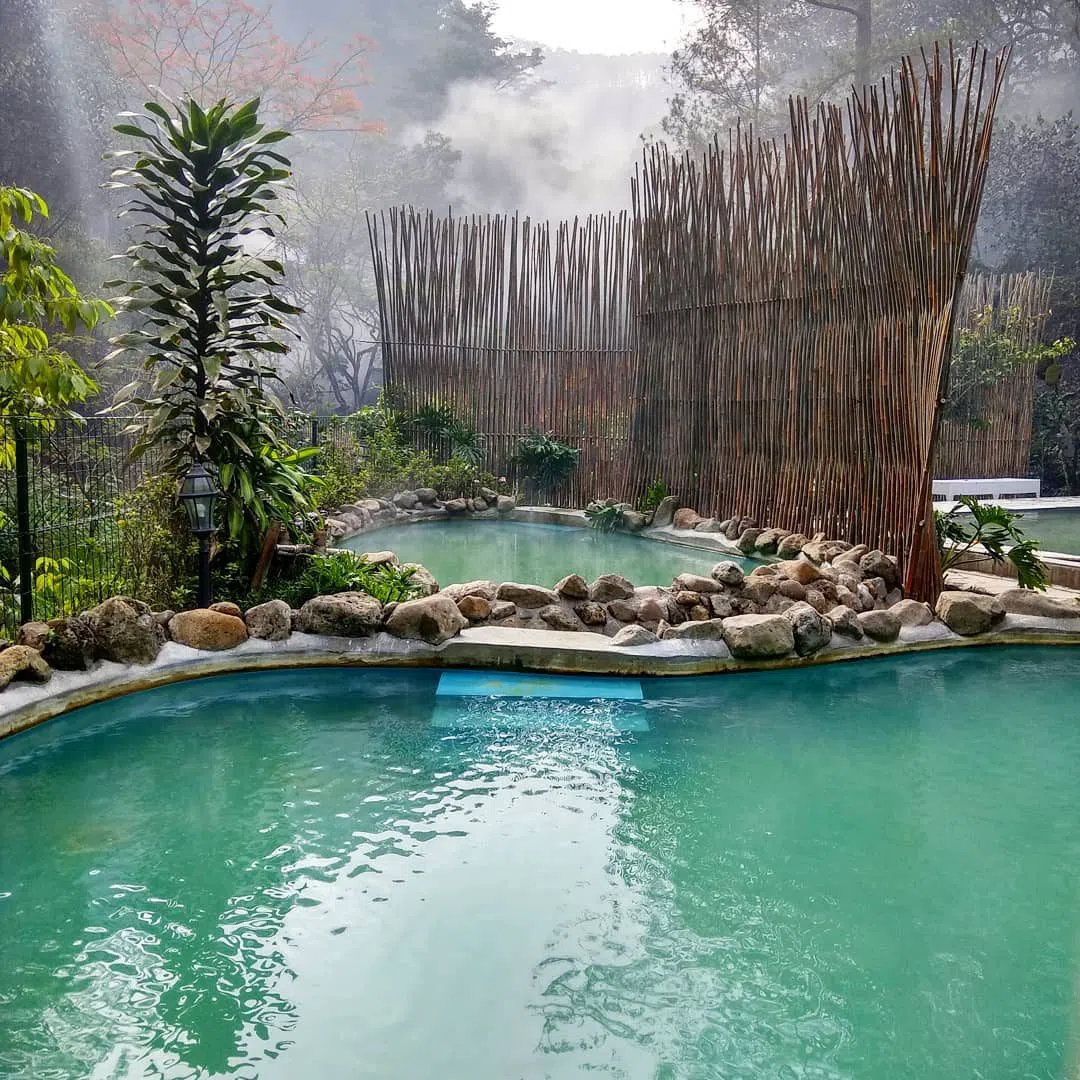
Sari Ater Hot Spring Recreation Park (Ciater, the north side of the mountain) has open-air terraced pools of steaming mineral water over dark rock, a hot waterfall dropping into a shallow creek and tea-plantation hills behind. It is the same volcanic plumbing you looked into that morning, spread over 30 hectares. Tickets are Rp58,000 to Rp98,000 depending on the package, the day of the week and the season. It opens 08:00 to 22:00, and that late closing is what rescues a morning that overran. Coaches park on site and there is a hotel attached.
Maribaya Natural Hot Spring Resort has hot pools stacked up a steep green ravine wall, a tall thin waterfall on the opposite side and a glass-fronted café cantilevered out over the drop. Bamboo and tree-fern fill the gaps. Entry is Rp35,000 on a weekday and Rp45,000 at weekends; the hot spring pool costs Rp90,000 to Rp100,000. Open 09:00 to 18:00. The pools fill mid-afternoon, which is the hour a volcano group tends to arrive.
Alternatives when the rim is clouded out
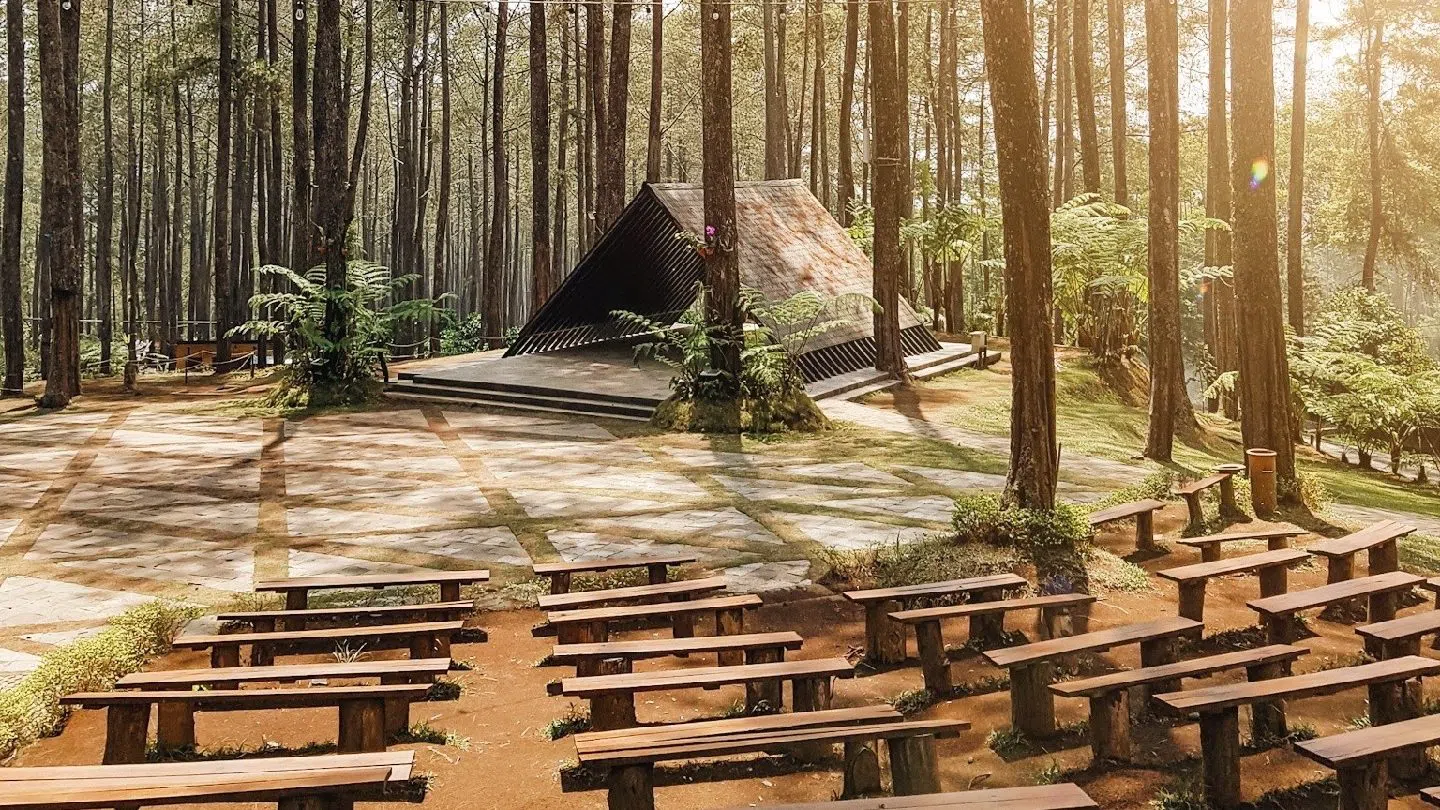
Orchid Forest Cikole is 10 minutes down the hill from the crater gate, which makes it the easiest switch when the view goes. A slatted wooden suspension bridge runs between tall pine trunks threaded with fairy lights, and racks of mounted orchids stand under shade netting with pine needles underfoot. The site has 12 hectares of protected pine forest and Indonesia's largest orchid collection. Entry is Rp40,000 domestic and Rp100,000 foreign. All Access is Rp125,000, or Rp165,000 with the Orchid Castle. Open Monday to Thursday 10:00 to 18:00, Friday 09:00 to 18:00, weekends 08:00 to 19:00.
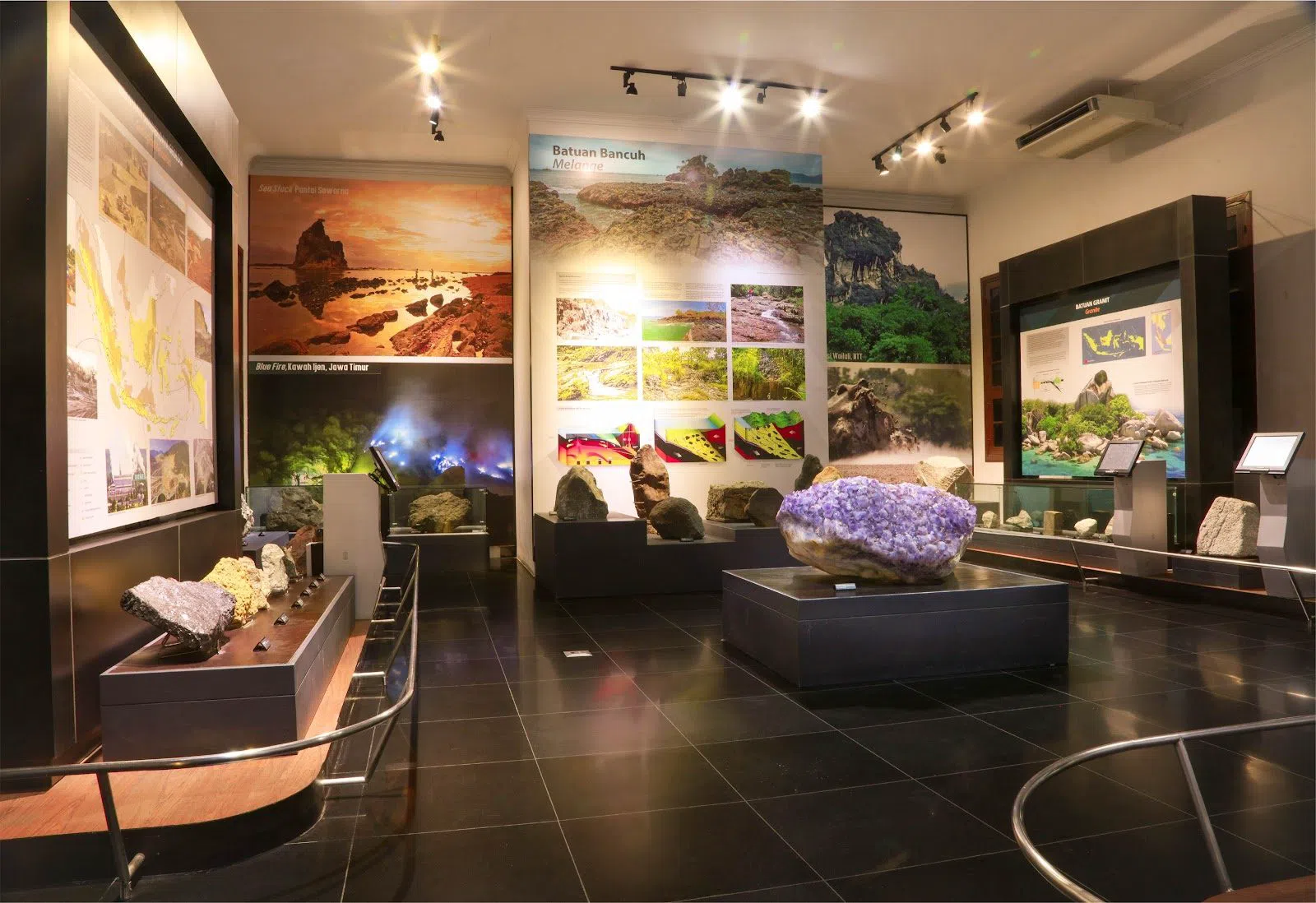
Museum Geologi Bandung (Jalan Diponegoro) occupies a white Dutch art-deco hall with high galleries, a mounted dinosaur skeleton cast, glass cases of volcanic bombs and sulphur crystals, and a scale relief model of the West Java volcanoes. It explains the ground you stood on for the price of a coffee. Foreign visitors pay Rp25,000. General admission is Rp5,000 and students Rp3,000. It closes at 15:00 on weekdays and 14:00 at weekends, so only a day that starts very early fits it in. A party over 20 must reserve in advance by phone or WhatsApp.
Stops on the road down
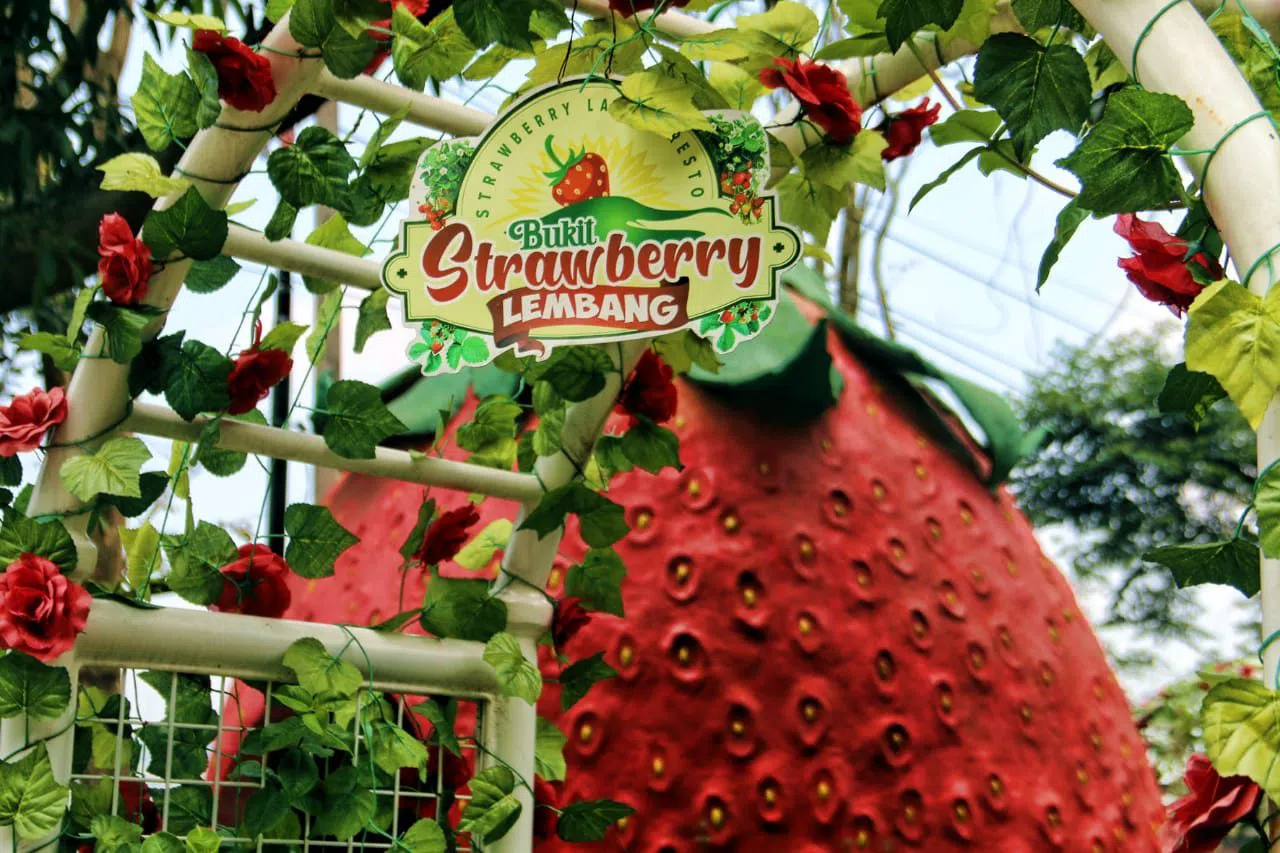
Bukit Strawberry Berbunga sits directly on Jalan Raya Tangkuban Parahu, so it costs no detour at all on the way down. Rows of strawberry plants grow in raised white polybags under low plastic tunnels, with marigold beds and photo frames along the slope. Entry is Rp35,000 to Rp45,000 including a strawberry juice, and fruit is charged by weight. It opens 08:00 to 17:00 daily, though the management shifts the details. Confirm the day before.
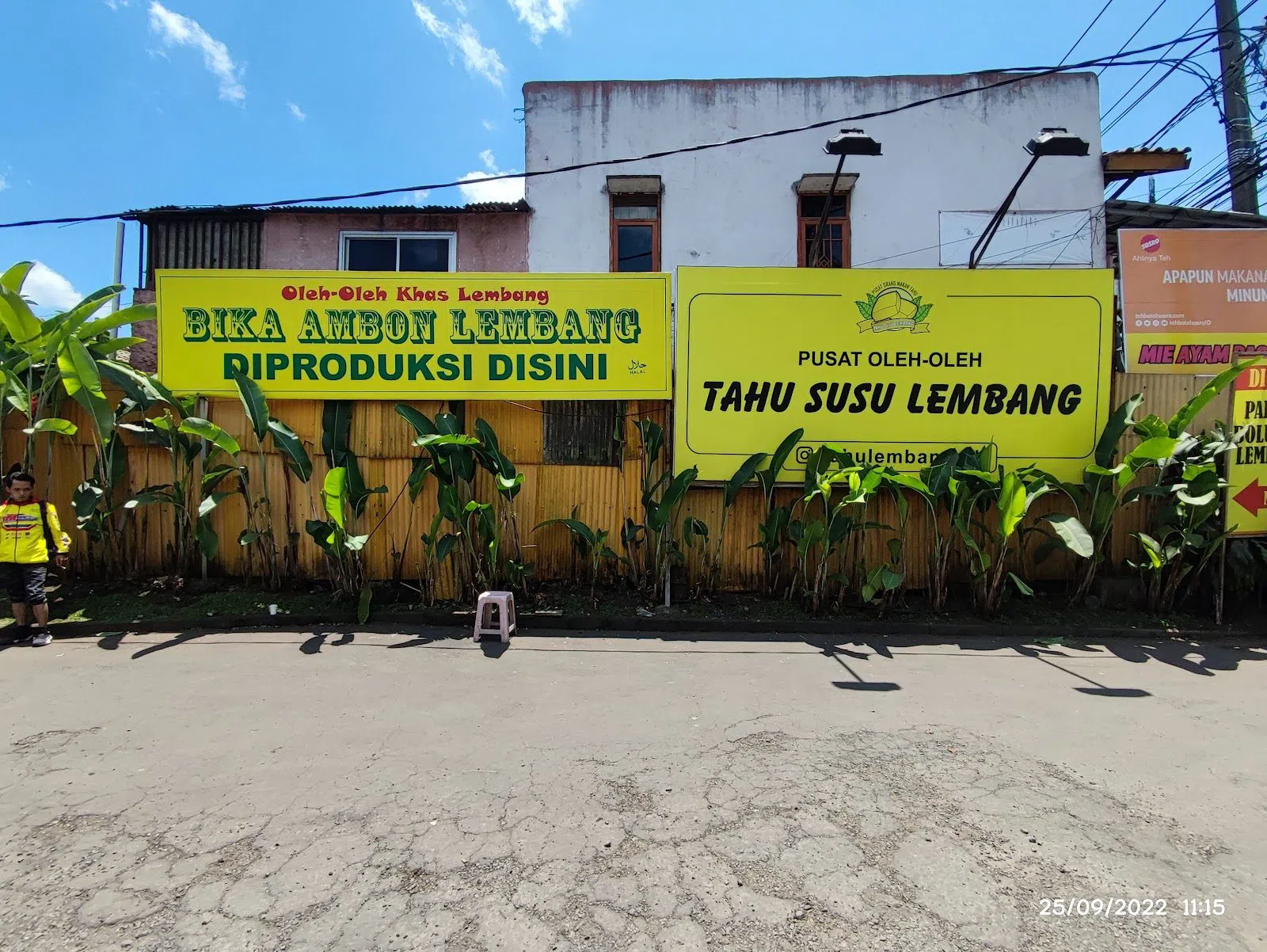
Tahu Susu Lembang (the Lembang main road) is an open-fronted roadside shop where fryers turn out pale cubes of milk tofu beside stacked cardboard boxes and tubs of sambal, scooters parked at the kerb. A box runs Rp25,000 to Rp50,000. Eat the fried ones hot in the car park; they do not travel. Open 08:00 to 19:00 on weekdays and to 20:00 at weekends. You cannot book, and this is where the coaches stop before the Jakarta road.
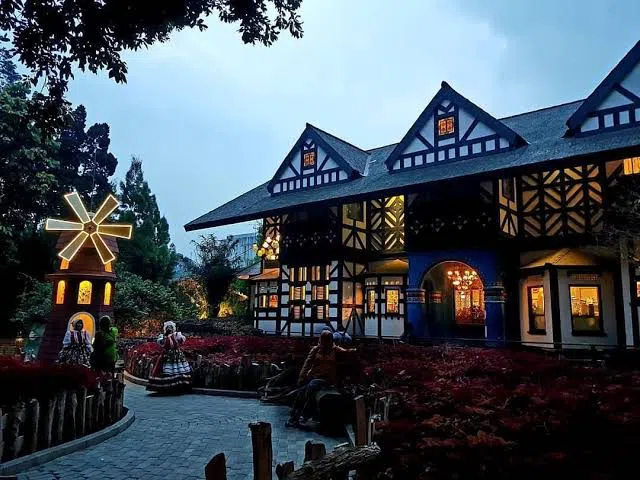
Farm House Lembang is unashamedly artificial and hugely popular with Indonesian families: mock-European cottages with steep shingled roofs, a round green hobbit door set into a grass mound, visitors in rented Dutch costumes and bottles of fresh milk. Entry is Rp35,000 with a milk or sausage voucher, and packages run Rp50,000 to Rp100,000 covering rides, milk education and costume rental. Open daily 09:00 to 18:00. Take children here. Skip it if you came for the geology.
A walk in the pines at Tahura
Taman Hutan Raya Ir. H. Djuanda (Tahura, Dago Pakar) carries a broad pine-forest path along a river gorge to Curug Omas, a 30 m waterfall with a footbridge across its lip. Dutch and Japanese cave tunnels, brick-arched and dripping, are cut into the hillside along the way. The park runs 590 hectares from Dago to Maribaya and is the cheapest serious walk in the region. Admission is Rp17,000, or Rp11,000 for students, open daily 08:00 to 16:00. You cannot book, and it pairs well with a Maribaya soak at the far end.
Walking up the Jayagiri Trail
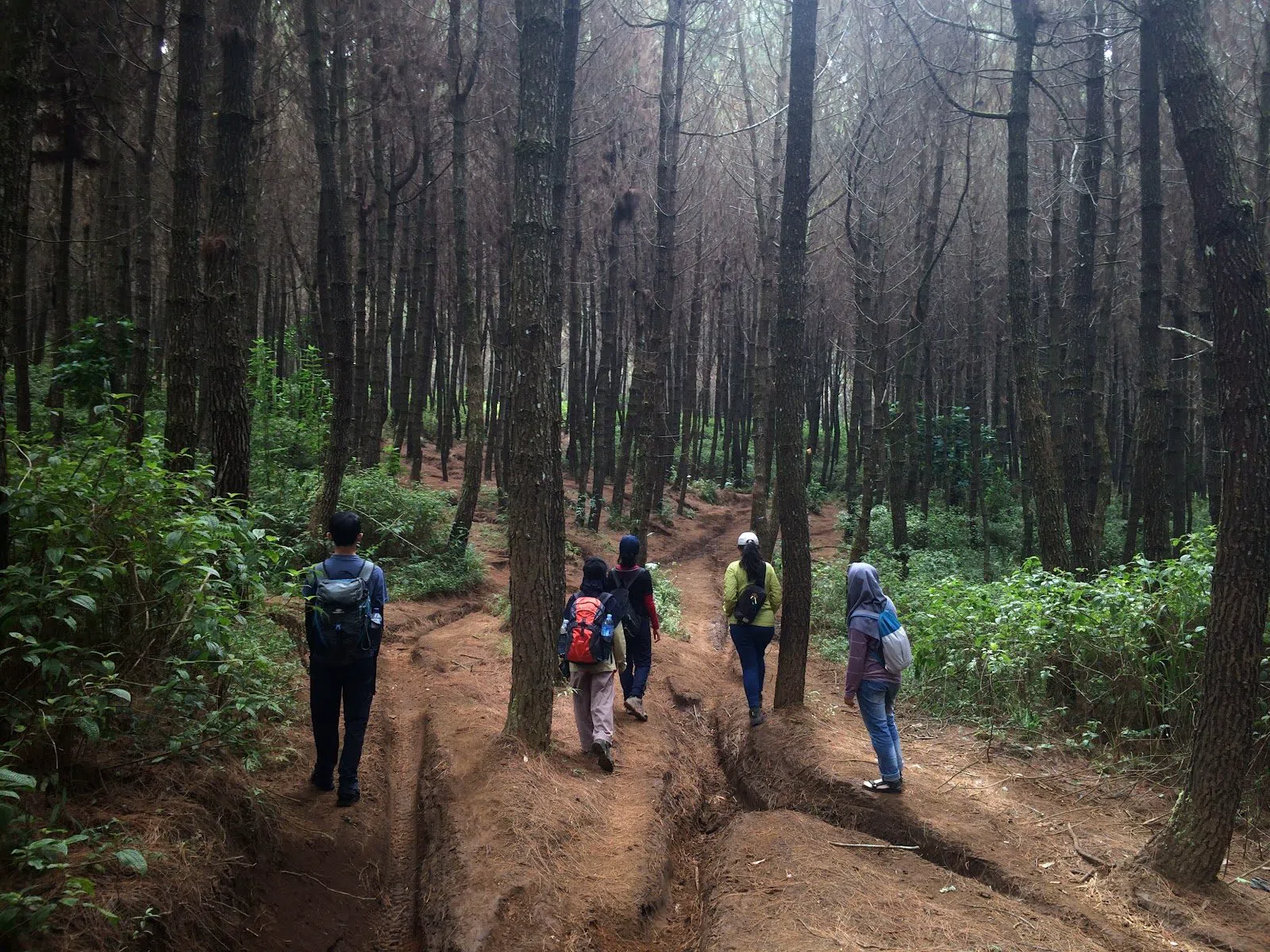
The Jayagiri Trail (the Tangkuban Parahu back route) is a wide rust-red earth track climbing through tall pine and casuarina forest, moss on the banks, mist between the trunks in the morning and farmland spread out below. The climb is 8 to 9 km and three to 3.5 hours. The gate fee is Rp15,000 to Rp25,000, and volcano admission is still payable if you exit into the crater area. No coach reaches the top. For a one-day round trip out of Jakarta this is the wrong choice; take it if you are staying over.
Is it worth it
It suits a visitor with one free day who wants a live crater and no climb to reach it, and who will pay the foreign gate rate for a five to 10 minute walk. Kawah Domas asks more, a forest descent and a stair climb back on ground that burns, and it is the part people remember.
Best time to go in October
The current season runs from 17 October 2026 to 16 October 2027. Go Monday to Thursday: the volcano gate and the Maribaya entry both charge less outside the weekend. Leave early enough to be at the rim in the morning, before cloud settles on the bowl. Maribaya stays open to 21:00 on Saturdays, which is the one way to take the soak after a slow lunch.
Before you go
Museum Geologi closes entirely on Fridays and national holidays, and a party over 20 has to book it by phone or WhatsApp. Reserve a hut at Kampung Daun and the Lutung Kasarung platform at Dusun Bambu; buy your tokens at the entrance to Floating Market before anyone queues for food. Watch the alert level, because the gates shut on short notice.
See the Jakarta guide and the Jakarta hotel search.
Avant de partir
How much does it cost to enter Mount Tangkuban Perahu in 2026?
Foreign admission is Rp200,000 on a weekday and Rp300,000 at weekends. A vehicle adds Rp15,000 to Rp135,000, and the shuttle is Rp10,000. Coaches pay a further Rp120,000 to Rp135,000 on top of each head. You buy tickets at the gate, and the park takes no reservations.
Do you need a guide for Kawah Domas?
Yes. Kawah Domas is guided only, one guide for one to six guests, so a larger party splits into groups. The guide costs Rp100,000 for up to six people on top of park admission, and you arrange it at the trailhead on the volcano road. Eggs and the sulphur mud spa cost extra, paid on site.
How hard is the walk down to Kawah Domas?
It is 1.2 km each way, 30 to 40 minutes down through forest and back up a flight of stairs. The ground is slippery in places and hot enough to scald, so keep to the marked line through the pools. The main Kawah Ratu rim asks much less: a five to 10 minute walk from the car park.
Can you see the crater and soak in a hot spring on the same day?
Yes. Sari Ater at Ciater is on the north side of the mountain, open 08:00 to 22:00, with tickets at Rp58,000 to Rp98,000 depending on package and season. Maribaya is closer to the city and has a waterfall as well as pools, open 09:00 to 18:00, but its pools fill mid-afternoon.
What happens if the volcano is closed or clouded out?
The alert level has sat at Level 1 (Normal) through 2026, but the gates close on short notice if that changes. Orchid Forest Cikole is 10 minutes down the hill from the crater gate, and Museum Geologi Bandung on Jalan Diponegoro covers the same geology indoors, though it shuts at 15:00 on weekdays and does not open on Fridays.